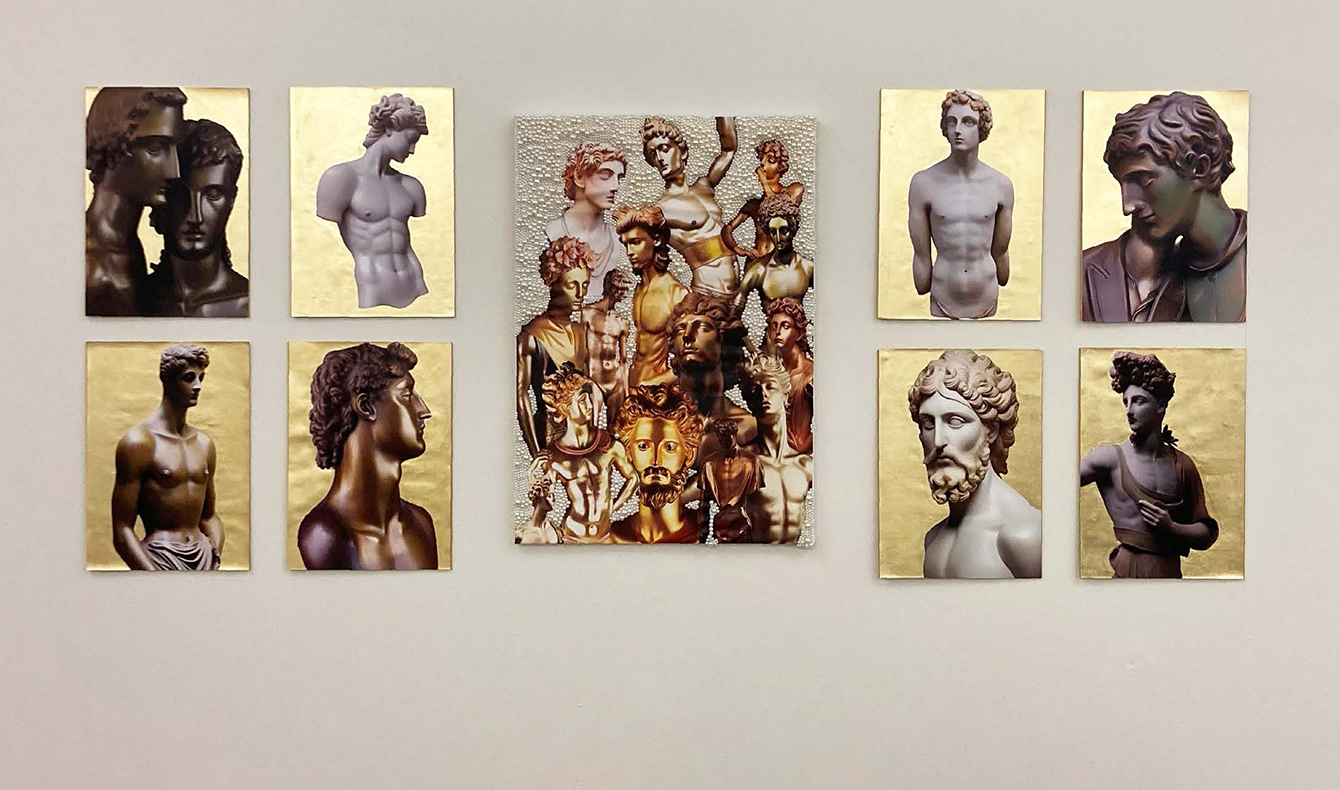
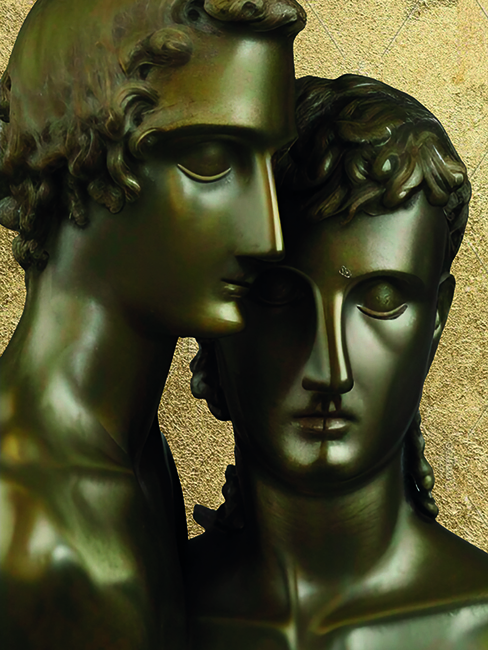
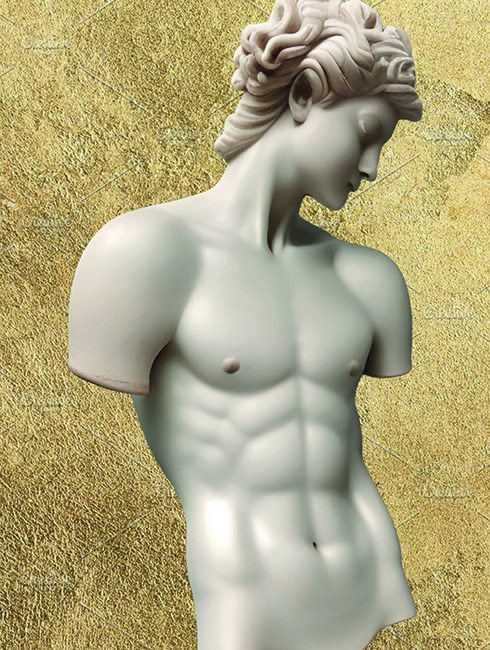
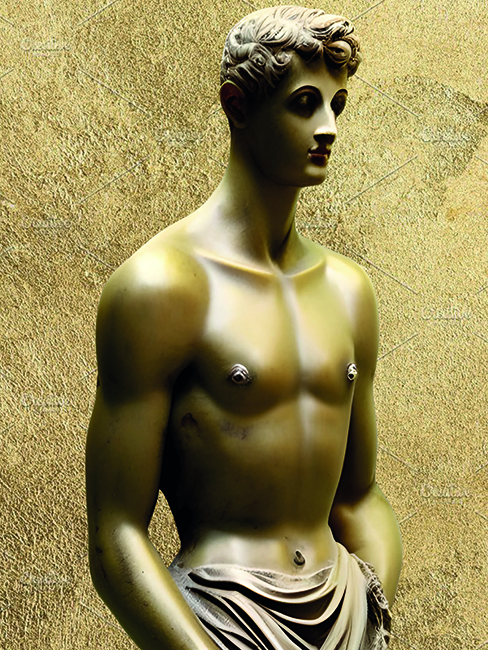
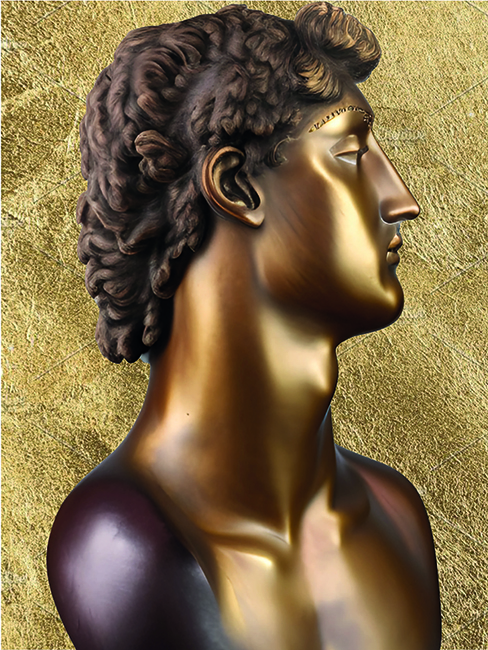
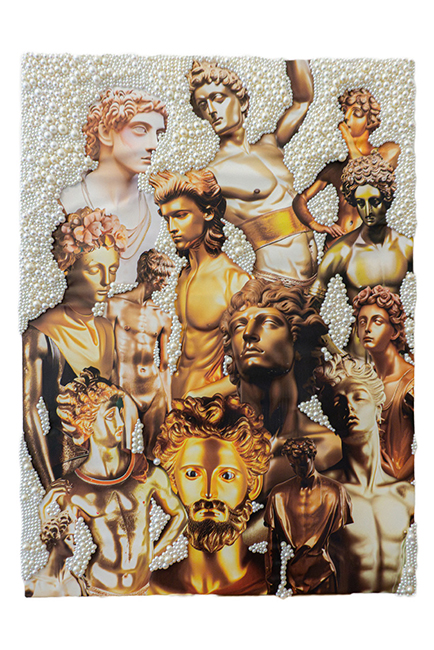
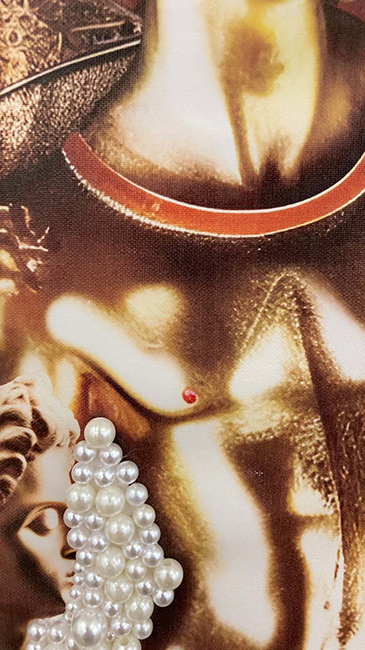
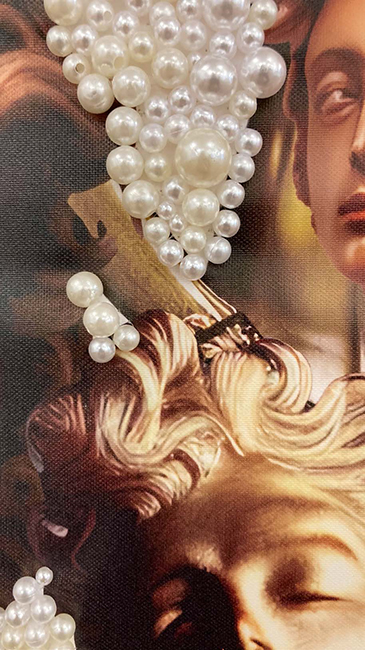
Queer narratives have historically been cast aside and placed in a certain “in between” from hegemonial-heteronormative history-writing. But at the same time, this „in between“ can also be perceived as a loophole; a gap that has the potential to generate a space where one‘s own historiography emerges, self-empowered on the basis of multiple and hybrid alternatives and in which an alignment within different ancestral lineages can be made possible.

In the search for a collective past, in order to be able to place oneself in a larger context of human history, there is then the possibility of creating alternative mythologies in which past histories can be made present. The only way to prevent what you are from being used against you is to speak about yourself be-fore others do. And taking the space to construct, define and position one‘s own queer ancestry against ascriptions by others, can help overturn possible established narratives and offers a possibility of researching and aligning oneself within a historised queer-ancestral lineage.

Including queer histories in one’s ancestral mythologies allows them to flow into one’s lived subject constructions, which in itself is an act of subversive protest. It not only forces the “outside” to re imagine their own positioning in contrast to one’s own, but at the same time can expand the perception of possible historical ancestors. Aligning oneself within queer histories essentially represents the space of action in which an exclusively factual or supposed naturalised reading and categorisation of ancestry can be dissolved and the concept of individual ancestral lineage expanded.